Start Today
☆
Start Today ☆
How You Can Help
Research Site Partner (Landowner & Trap Host)
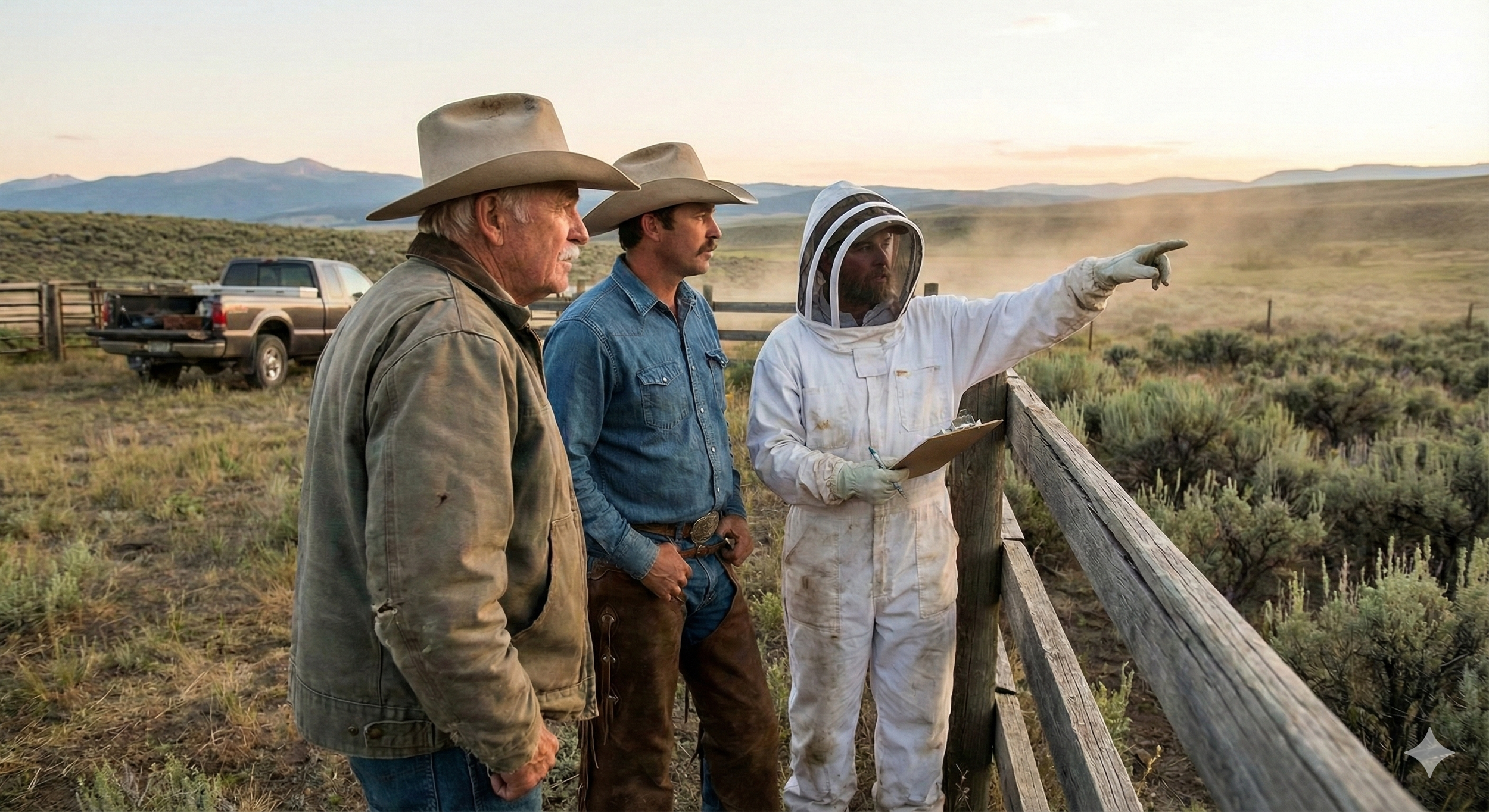
The Foundation of Our Research
Our mission to understand and protect local bee populations starts with the land. We are looking for property owners—specifically those situated near the forest edge—to serve as Research Site Partners. Without the generous collaboration of local landowners, our ability to track, study, and relocate swarms would be impossible. Your property provides the "ground zero" data necessary for the San Francisco Peaks Apiary Research project.
The Role
As a partner, you provide a strategic foothold for science. We will place a professional, non-invasive 5-frame swarm trap on your property. This trap serves as a temporary sanctuary for migrating honey bees, allowing us to monitor their movements and health.
Your Commitment: Low Effort, High Impact
This is a passive but critical scientific contribution.
Zero Maintenance: We handle the installation, maintenance, and eventual removal of the trap.
The "Scout" Factor: All we ask is that you keep a casual eye on the site. If you notice a sudden increase in bee activity or a swarm moving in, simply send us a quick notification.
Safe & Discreet: Our traps are designed to be unobtrusive and safe for your family and pets.
Why Your Land Matters
The forest edge is a vital biological corridor. By hosting a trap, you aren't just letting a box sit on your fence line—you are providing the essential infrastructure needed to solve the complex puzzles of pollinator competition and hive health in the Flagstaff area.
Field Scout & Forest Monitor
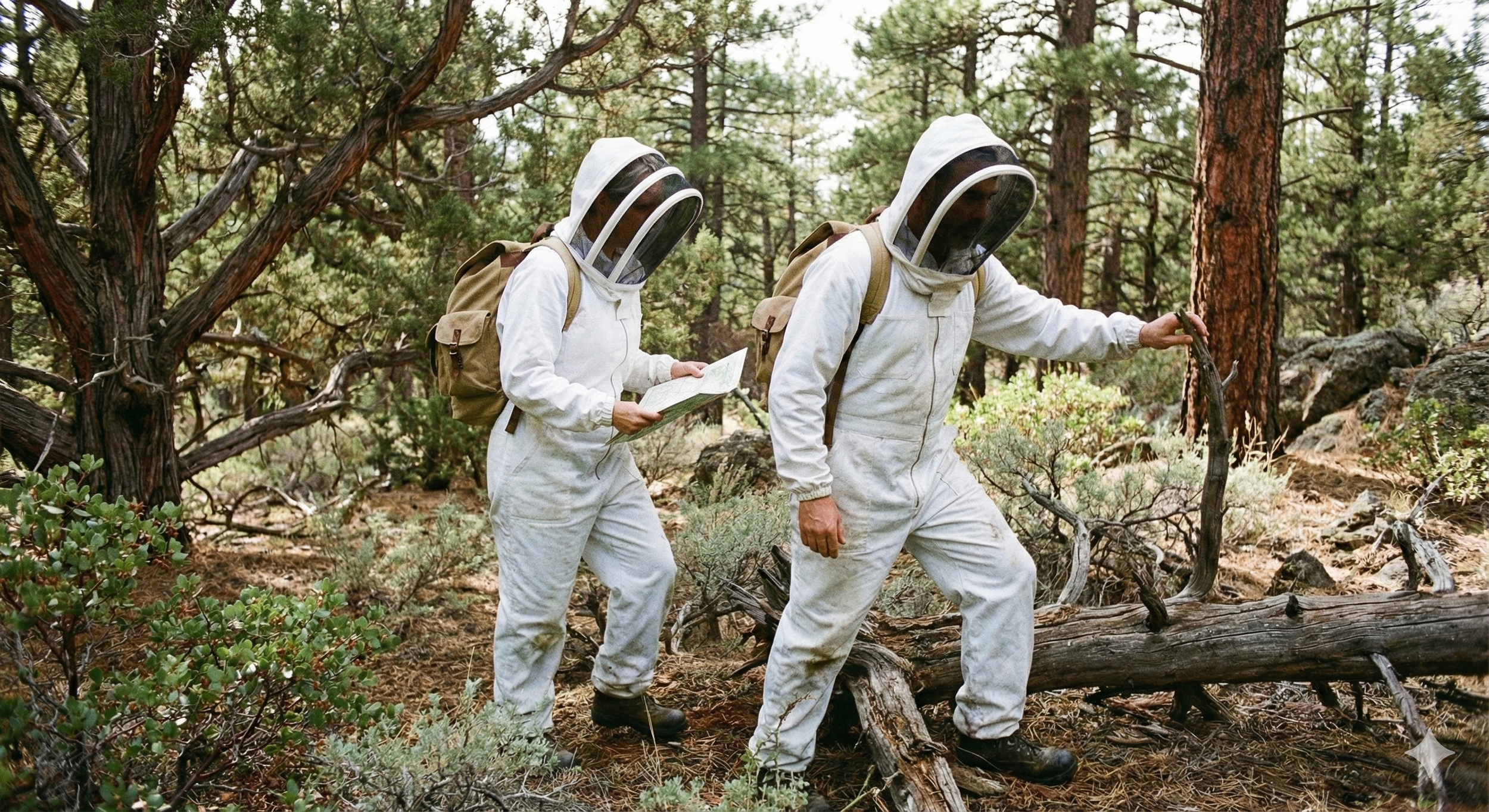
The "Forest Gym" Advantage
Forget the treadmill. This position offers the ultimate outdoor workout.
Functional Fitness: Improve your balance, agility, and endurance by navigating the natural uneven terrain of the forest floor.
Mental Clarity: Research shows that "forest bathing" and consistent outdoor activity significantly reduce stress and improve cognitive function.
Purposeful Cardio: Turn your weekly hike into a mission of ecological importance. Every step you take helps us understand how to better protect our native and honey bee populations.
Why You?
We need scouts who are reliable, fit, and possess a deep respect for the rustic beauty of Flagstaff’s backcountry. If you want a volunteer position that keeps your heart rate up and your spirit high, this is your calling.
The Call of the Wild
Do you find your peace among the ponderosas? If you’re happiest when your boots are on the ground and you’re breathing in the crisp air of the Coconino National Forest, we need your eyes and your energy. This is not a role for the casual sidewalk stroller—this is for the adventurers, the hikers, and the "young at heart" who aren't afraid to step off the beaten path in the name of science.
The Role: Tactical Forest Surveillance
As a Field Scout, you are our frontline eyes in the wilderness. The San Francisco Peaks Apiary Research team places swarm traps in strategic, remote locations to track wild bee movements. Your mission is to "adopt" a trap route and ensure these sites are monitored during the critical swarm season.
The Trek: You’ll navigate forest terrain to reach our trap locations, often requiring a bit of off-trail hiking and rugged movement.
The Inspection: You will perform regular visual checks on a 3-to-7-day cycle, looking for the tell-tale signs of "scout bee" activity or a newly settled swarm.
The Data: A quick status update from the field allows our retrieval team to move in precisely when needed.
Apiary Logistics & Transport Specialist
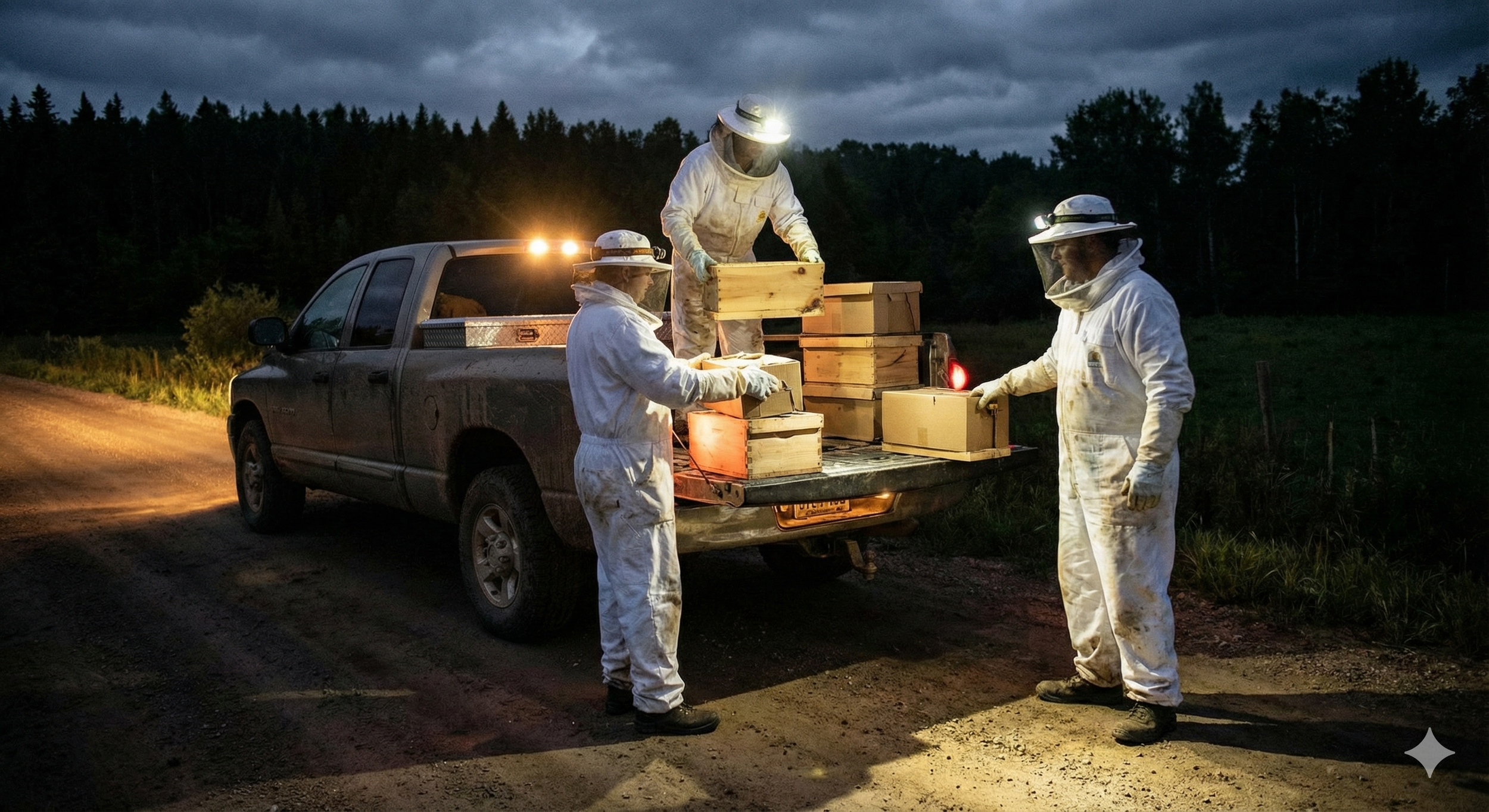
Why This Role?
You are the bridge between the wild and the lab. By ensuring these colonies reach our quarantine apiary safely, you enable the critical genetic and health assessments that drive San Francisco Peaks Apiary Research forward.
The Mission: Precision Relocation
When a swarm trap becomes active, the clock starts ticking. We need a dedicated Logistics & Transport Team to ensure our new colonies are moved safely and efficiently from the field to our research quarantine apiary. This is the "heavy lifting" phase of our research, requiring volunteers who are calm under pressure and comfortable working in the quiet hours of the night.
The Operation
This isn't a typical 9-to-5 role. To ensure the safety of the bees and the public, our transport operations follow a specific biological rhythm:
Nighttime Extraction: Once the sun sets and the foragers return home, we seal the traps. This ensures the entire colony is moved together.
The Midnight Move: You will assist in transporting these sealed 5-frame traps to our designated quarantine site.
Dawn Orientation: The following morning, the traps are unsealed, allowing the bees to perform their orientation flights and settle into their new research environment.
Requirements & Safety
Because you will be working directly with live colonies, safety is our absolute priority.
Sting Resiliency: This role is strictly for individuals who are not allergic to bee stings. While we provide protective gear and the hives are sealed, the nature of beekeeping involves a risk of stings. Applicants must be confident and calm in the presence of honey bees.
The "Workhorse" Advantage: Do you own a pickup truck? If so, you are a valuable asset. Having a vehicle with an open bed is the gold standard for safe, ventilated bee transport.
Night Owls Welcome: If you enjoy the serenity of the night and the satisfaction of a job well done before the rest of the world wakes up, this is the team for you.
Native Habitat Restoration Specialist
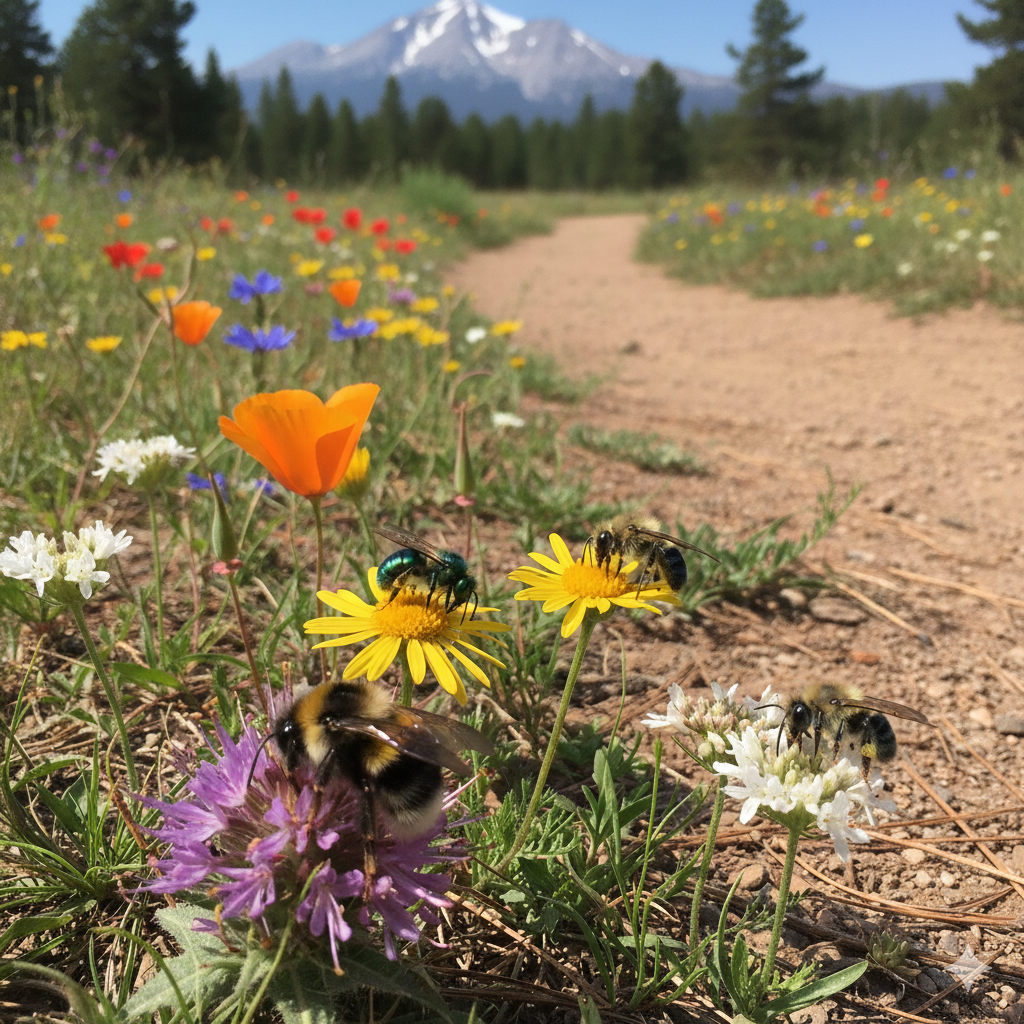
The Mission
At the San Francisco Peaks Apiary Research organization, we believe in a balanced ecosystem. A common concern in beekeeping is the competition between honey bees and native pollinators. This role is our most strategic solution: by expanding native forage along Flagstaff’s extensive trail systems, we ensure that every pollinator—from the tiniest native sweat bee to the hardworking honey bee—has the resources they need to thrive in harmony.
Your Impact
As a Restoration Specialist, you are the boots on the ground for local biodiversity. You will manage "pollinator corridors" along our city's bike and walking paths through three critical actions:
Strategic Seeding: Armed with a pocket of native seeds and a bottle of water, you’ll use the "heel-trough" method to tuck life into the soil. It’s a simple gesture with a massive environmental footprint.
Targeted Weeding: You are the protector of the peaks. By removing invasive species that attempt to strangle our local flora, you ensure our beautiful native flowers have the space and nutrients to bloom.
Conflict Mitigation: By creating these dedicated native zones, you provide "buffer forage" that allows native pollinators to gather nectar away from larger honey bee colonies.
Why This Role?
While other positions may be more visible, this is arguably our most essential volunteer effort. You aren't just planting seeds; you are engineering a landscape where nature remains in balance. It isn't glamorous work—it’s gritty, vital, and deeply rewarding.