A Quick Lesson in Honey Bees vs. Native Pollinators
While backyard beekeeping has grown in popularity as homeowners seek to support
pollinators, it's crucial to understand the broader context of pollinator decline. The primary
threat to native pollinators isn't backyard beehives—it's habitat loss from expanding
residential and commercial development. As Flagstaff continues to grow, natural
landscapes are converted into homes, parking lots, and buildings, eliminating the native
wildflowers and nesting sites that native bees, butterflies, and other pollinators depend on
for survival. Managed honeybees, though they do compete with native pollinators for floral
resources within their foraging radius, represent a far smaller impact on pollinator
populations than the ongoing destruction of their habitat. Understanding this hierarchy of
threats helps us focus our conservation efforts where they'll make the most difference.
Native plants form the foundation of healthy pollinator ecosystems, having co-evolved with
local pollinators over thousands of years. Unlike many ornamental garden plants, native
wildflowers provide the specific nutrition, bloom timing, and habitat structure that native
bees, moths, butterflies, and other pollinators require throughout their life cycles. Many
native bee species are specialists, adapted to feed on particular plant families found only
in their region. When we plant native species along trails and in natural areas, we're not just
adding color to the landscape—we're rebuilding the complex ecological relationships that
sustain pollinator populations. These plantings also create corridors that allow pollinators
to move between fragmented habitats, which is essential for maintaining genetic diversity
and resilient populations in our increasingly developed landscape.
Honeybees play a vital role in supporting local food production, particularly for the
vegetable gardens and fruit trees that Flagstaff residents cultivate in their yards. Many of
the crops we depend on—tomatoes, squash, cucumbers, apples, and berries—originated
in different parts of the world and aren’t always effectively pollinated by our native
specialists. While native pollinators excel at working with the plants they evolved
alongside, they may visit non-native garden crops less frequently or be less efficient at
transferring pollen between these imported species. Honeybees, as generalist foragers,
readily visit a wide variety of flowering plants regardless of origin, making them particularly
valuable for backyard food production. A nearby beehive can significantly improve fruit set
and yields in home gardens, turning flowers into abundant harvests. This agricultural
benefit is one of the key reasons homeowners choose to host hives—and through San
Francisco Peaks Apiary’s initiative, that personal gardening success now directly funds the
restoration of native habitat that sustains the wild pollinators our native ecosystem
depends upon.
San Francisco Peaks Apiary's new initiative recognizes that responsible beekeeping means more than just managing honeybee colonies—it means supporting the entire pollinator
community. By linking each spring/summer beekeeping service to donations of money and volunteer time for planting native wildflowers along Flagstaff's walking and biking trails, the
program creates a direct connection between the enjoyment of backyard beekeeping and meaningful habitat restoration. This approach acknowledges that while honeybees and
native pollinators do compete for the same floral resources; we can work to expand those resources rather than simply choosing one pollinator over another. When beekeeping
enthusiasts support native plant restoration, they're helping to create a more abundant landscape where both managed honeybees and wild native pollinators can thrive—turning
what could be a zero-sum competition into a community-wide investment in pollinator health and biodiversity.
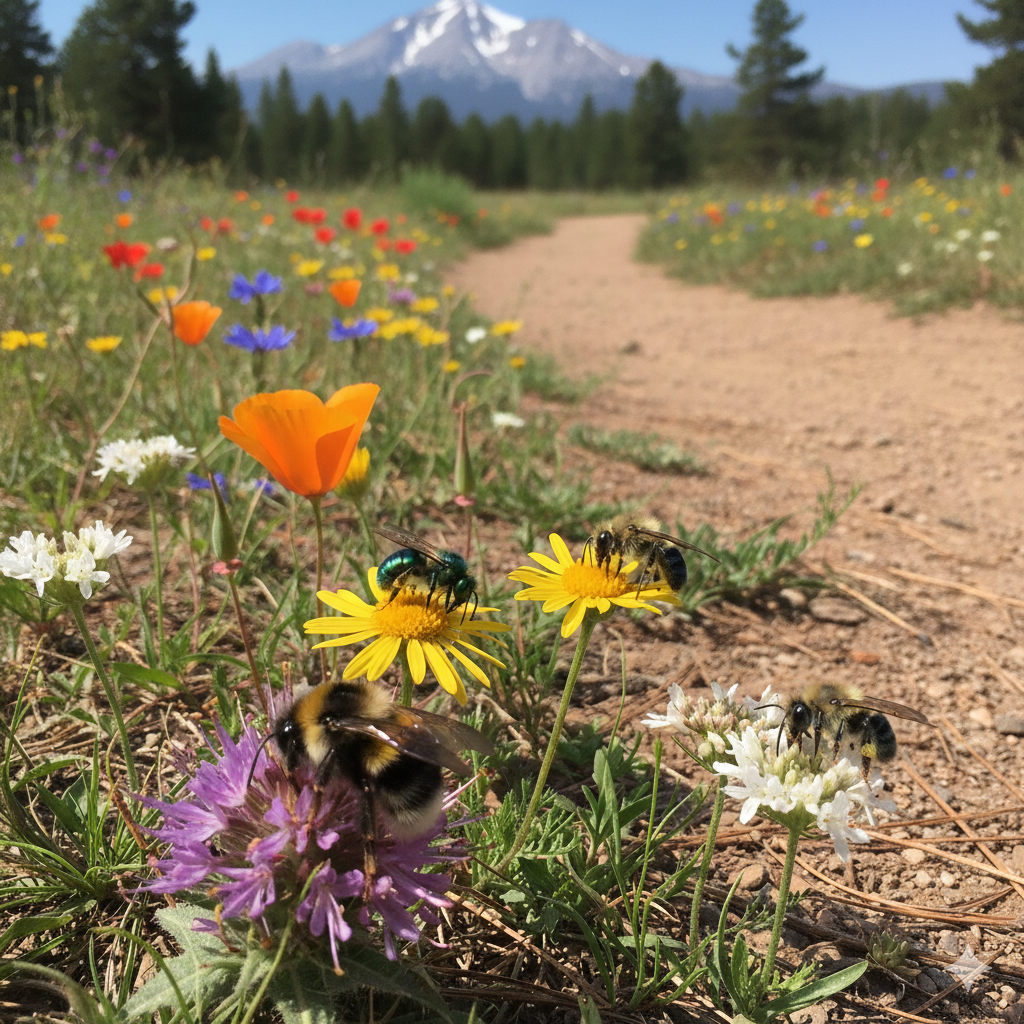
1. The Managed Pollinator
Honey Bee (Apis mellifera)
Appearance: These are the amber and brown striped bees.
Role: The generalist forager. In the image, you can see them targeting the abundant resources like the purple Penstemon.
2. The Native Pollinators
Hunt's Bumble Bee (Bombus huntii) or Morrison's Bumble Bee (Bombus morrisoni)
Appearance: The large, fuzzy bee with distinct bands of yellow, black, and sometimes orange.
Flagstaff Context: These are very common in the high country. They are capable of "buzz pollination" (vibrating their flight muscles to release pollen), which honey bees cannot do.
Metallic Green Sweat Bee (Agapostemon species)
Appearance: The smaller, striking jewel-green bee.
Flagstaff Context: These are solitary ground-nesters. They are often seen on open-faced flowers like the Blue Flax or Globe Mallow shown in the image.
Monarch Butterfly (Danaus plexippus)
Appearance: The large butterfly with the iconic orange and black stained-glass pattern.
Flagstaff Context: Flagstaff is on a migration route for Monarchs. They rely heavily on native milkweeds (for caterpillars) and late-blooming nectar sources (like Rabbitbrush and Asters) to fuel their migration.
These insects are shown foraging on Rocky Mountain Penstemon (purple), Scarlet Globe Mallow (orange/red), and Blue Flax—all staples of a Flagstaff native pollinator garden.